
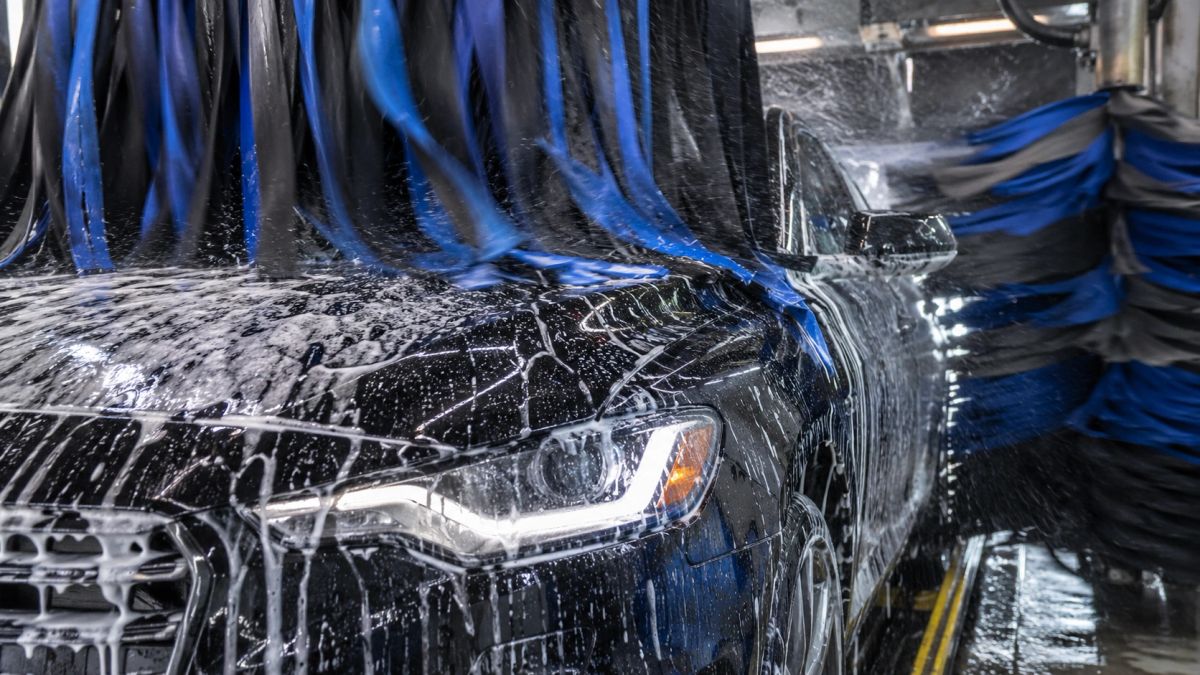
Automatic car washes are quick, convenient, and usually inexpensive. When your vehicle is covered in pollen, bugs, dust, or road grime, pulling through a car wash can seem like the easiest solution.
But are automatic car washes actually safe for your paint?
The honest answer is that it depends on the type of wash, the condition of the equipment, and how much you care about preventing scratches and swirl marks.
Not All Automatic Car Washes Are the Same
There are two main types of automatic car washes:
Soft-Touch Car Washes
Soft-touch washes use spinning brushes, cloth strips, or other materials that make direct contact with the vehicle.
The problem is not always the material itself. The bigger concern is what may be trapped inside it.
Those brushes and cloth strips clean hundreds of vehicles. Dirt, sand, brake dust, and other debris can remain in the material and then be dragged across the next vehicle’s paint.
Over time, this can create:
- Fine scratches
- Swirl marks
- Dull-looking paint
- Damage to delicate trim
- Wear on waxes, sealants, and coatings
The damage may not be obvious after one wash. It often becomes more noticeable over time, especially on black, dark blue, red, and other darker paint colors.
Touchless Car Washes
Touchless washes clean the vehicle using water pressure and chemicals instead of brushes.
Because nothing physically touches the paint, there is less risk of contact scratches. However, touchless washes have their own limitations.
Without physical agitation, the wash may rely on stronger chemicals to loosen dirt and road film. These chemicals can sometimes weaken waxes, sealants, and other protective products more quickly.
Touchless washes may also leave behind:
- Dirt in heavily contaminated areas
- Bug residue
- Road film
- Water spots
- Grime around emblems, trim, and body lines
A touchless wash is generally the safer automatic option, but it may not clean the vehicle as thoroughly as a proper hand wash.
What About the Drying Process?
The drying stage can also affect the vehicle.
Some automatic washes use powerful air dryers, which are usually safer than anything that touches the paint. However, the dryers may not remove all the water.
Other locations may have employees towel-dry the vehicle after the wash. The results depend on how clean the towels are and how they are used.
A towel that has been dropped, reused too many times, or used on several vehicles can pick up debris and scratch the paint.
Can Automatic Car Washes Damage Ceramic Coatings?
A ceramic coating is more durable than traditional wax, but it is not scratch-proof.
A coated vehicle can still develop swirl marks from dirty brushes, rough cloth strips, or improper towel drying. Strong wash chemicals can also affect the coating’s water behavior and shorten the life of certain maintenance products.
The coating may help protect the paint underneath, but it should not be treated like an invisible shield against every type of damage.
A coated vehicle is best maintained with proper hand washing or a reputable touchless wash when hand washing is not available.
Is an Automatic Wash Ever Worth Using?
Sometimes convenience matters.
A touchless wash can be useful when:
- You need to remove pollen or light dirt quickly
- The vehicle is covered in bird droppings
- You cannot safely hand wash the vehicle
- You are traveling
- You need to rinse away road grime before it sits too long
Leaving bugs, bird droppings, salt, or heavy contamination on the paint can also cause damage. In some situations, a touchless wash is better than doing nothing.
The goal is not to avoid every automatic wash forever. It is to understand the risks and choose the safest option available.
The Safest Way to Wash Your Vehicle
A proper hand wash gives you more control over the products, towels, tools, and techniques being used.
A safer wash process includes:
- Washing the vehicle when the paint is cool
- Rinsing away loose dirt before touching the paint
- Using a dedicated automotive shampoo
- Using clean wash mitts and microfiber towels
- Keeping wheel tools separate from paint tools
- Washing from the top down
- Drying with a clean microfiber towel or filtered air
- Using proper lubrication to reduce friction
These steps help reduce the chance of dragging dirt across the paint.
The Bottom Line
Soft-touch automatic washes are convenient, but repeated use can lead to swirl marks and fine scratches.
Touchless washes are usually the safer automatic option, although they may use stronger chemicals and may not remove all contamination.
For drivers who want to preserve the appearance of their paint, a careful hand wash remains the best option. When that is not possible, choose a reputable touchless wash and avoid any service that uses dirty brushes or questionable drying towels.
The safest wash is not always the fastest one. A little extra care can help keep your vehicle’s paint cleaner, glossier, and better protected for years.