
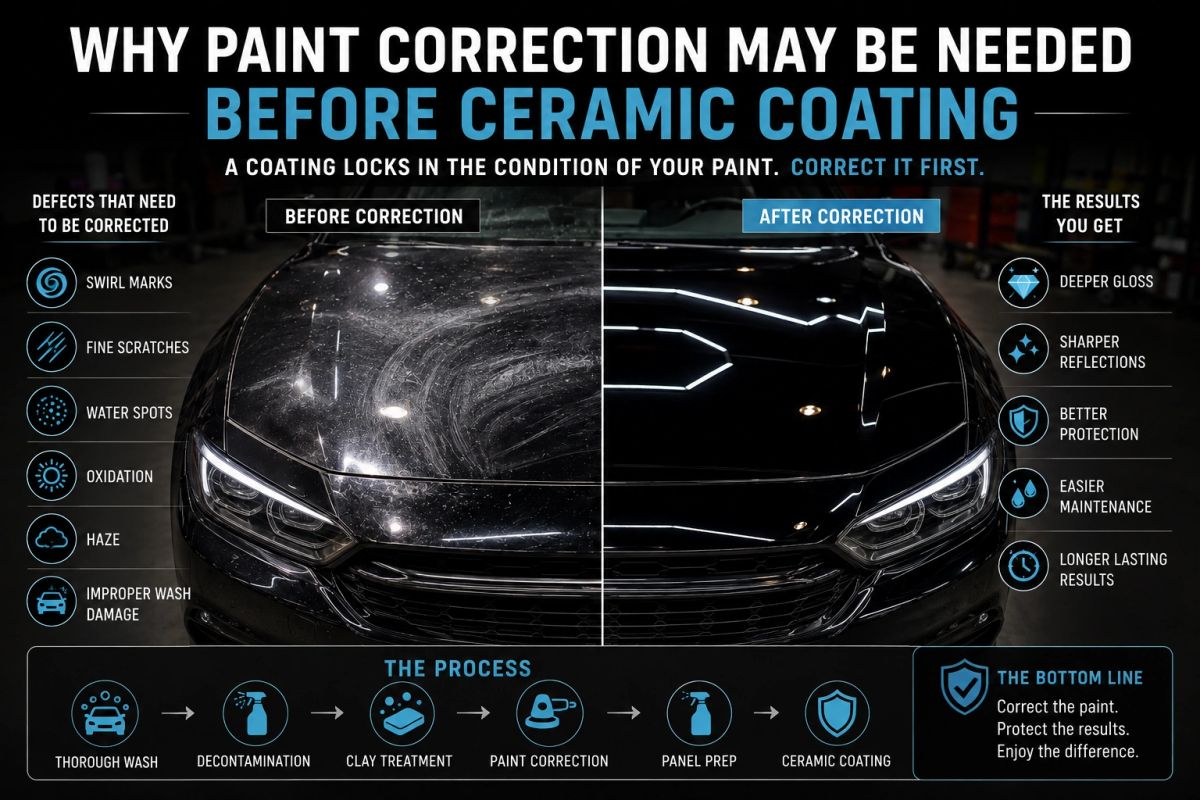
Ceramic coating is often associated with deep gloss, sharp reflections, and a nearly flawless finish.
But the coating itself does not create that finish.
A ceramic coating adds protection and enhances the appearance of the surface underneath it. If the paint already has swirl marks, scratches, oxidation, water spots, or other defects, those imperfections will usually remain visible after the coating is applied.
In some cases, the added gloss can make them even easier to see.
That is why paint correction may be recommended before installing a ceramic coating.
What Is Paint Correction?
Paint correction is the process of machine-polishing a vehicle’s clear coat to reduce or remove visible defects.
These defects may include:
- Swirl marks
- Fine scratches
- Water-spot etching
- Oxidation
- Haze
- Improper sanding marks
- Marring from automatic car washes
- Damage caused by poor washing techniques
The goal is not simply to cover the imperfections. Proper polishing carefully levels a very small amount of clear coat around the damaged area, making the surface smoother and improving how light reflects from the paint.
That improved reflection is what creates greater clarity, gloss, and depth.
Ceramic Coating Does Not Remove Scratches
One of the most common misunderstandings about ceramic coating is that it fills in or removes scratches.
It does not.
A coating may temporarily make extremely light imperfections less noticeable because of the added gloss and slickness. However, it will not permanently correct scratches, swirl marks, or oxidation.
Once the coating cures, it preserves the condition of the paint beneath it.
If the vehicle is coated while the paint is heavily swirled, those swirl marks are essentially being protected along with everything else.
Why Preparation Matters
A ceramic coating needs a clean, properly prepared surface to bond correctly.
Before installation, the paint is usually put through several preparation steps, which may include:
- Thorough washing
- Bug and tar removal
- Iron decontamination
- Clay treatment
- Water-spot removal
- Machine polishing
- Panel cleansing
- Final inspection
Each step serves a different purpose.
Washing removes loose dirt. Chemical decontamination removes embedded particles such as iron and road contamination. Clay removes bonded material that washing alone cannot reach.
Polishing improves the paint itself.
After polishing, the surface must be cleaned to remove polishing oils and residue. The coating can then bond directly to the clear coat instead of sitting over contamination or leftover product.
Does Every Vehicle Need Paint Correction?
Not every vehicle needs extensive paint correction before ceramic coating.
The amount of correction depends on the condition of the paint and the owner’s expectations.
A newer vehicle with minimal defects may only need a light polishing step to improve gloss and prepare the surface.
An older daily driver that has been through years of automatic car washes may need more correction to noticeably improve its appearance.
Some owners are satisfied with removing the majority of visible defects. Others want the paint brought as close to flawless as safely possible.
The right approach should be based on:
- Paint condition
- Clear-coat thickness
- Vehicle age
- Previous repairs
- Budget
- Desired final appearance
- How the vehicle will be used
More correction is not always better. Preserving the long-term health of the clear coat is more important than chasing every last imperfection.
New Vehicles Can Still Have Paint Defects
A brand-new vehicle does not always have perfect paint.
New vehicles can develop defects during manufacturing, transportation, dealership washing, storage, and delivery preparation.
Common issues include:
- Light swirl marks
- Scratches
- Water spots
- Adhesive residue
- Rail dust
- Improper polishing marks
- Contamination from transportation and outdoor storage
Dealerships may also wash vehicles using brushes or towels that are not ideal for delicate paint.
Because of this, a new vehicle should still be inspected carefully before coating. It may not need significant correction, but it often benefits from proper decontamination and light polishing.
What Is a One-Step Paint Correction?
A one-step correction uses one polishing stage to improve gloss and reduce moderate defects.
It is often a good fit for daily-driven vehicles that need a noticeable improvement without pursuing a nearly perfect finish.
A one-step process may remove or reduce:
- Light swirl marks
- Fine scratches
- Mild oxidation
- Haze
- Light water spotting
The amount of improvement depends on the paint system, polishing combination, defect severity, and clear-coat condition.
One-step correction offers a practical balance between appearance, time, cost, and clear-coat preservation.
What Is Multi-Step Paint Correction?
More severe defects may require multiple polishing stages.
A heavier cutting stage is used first to address deeper imperfections. A refining stage follows to improve clarity, remove polishing haze, and create a more finished appearance.
Multi-step correction may be appropriate for paint with:
- Heavy swirl marks
- Significant oxidation
- Deeper scratches
- Severe wash damage
- Sanding marks
- Poor previous polishing work
This process takes considerably more time and should only be performed after inspecting the paint.
Some defects may be too deep to remove safely. When a scratch extends beyond the clear coat, polishing cannot fully repair it.
Trying to remove every defect can unnecessarily thin the clear coat and reduce the paint’s long-term durability.
Why Not Just Coat the Vehicle Without Polishing?
A vehicle can technically be coated without major paint correction, provided the surface is properly cleaned and prepared.
That may be reasonable when:
- The owner is satisfied with the current appearance
- The vehicle is primarily used for work
- Maximum gloss is not the priority
- The paint is already in good condition
- The goal is protection rather than perfection
However, skipping polishing means the existing defects will remain.
Because ceramic coatings are designed to last for years, it often makes sense to improve the paint before sealing in its current condition.
The preparation should match the owner’s goals rather than automatically forcing every vehicle into an extensive correction process.
Paint Correction and Protection Have Different Jobs
Paint correction improves the appearance of the paint.
Ceramic coating protects and preserves that improved surface.
They work well together, but they are not the same service.
Paint correction addresses existing damage. Ceramic coating helps reduce future contamination, chemical exposure, and maintenance difficulty.
The coating will not prevent every new scratch, so safe washing is still essential after installation.
What Happens After the Coating Is Applied?
Once the paint has been corrected and the coating is installed, the vehicle still requires proper care.
To preserve the finish:
- Avoid soft-touch automatic car washes
- Use clean microfiber towels and wash mitts
- Remove bird droppings and bugs promptly
- Avoid washing hot paint in direct sunlight
- Dry the vehicle instead of letting hard water evaporate
- Use coating-safe maintenance products
- Schedule periodic decontamination when needed
The goal is to avoid recreating the same defects that were corrected before installation.
The Bottom Line
Paint correction may be needed before ceramic coating because the coating does not remove scratches, swirl marks, oxidation, or water spots.
It enhances and protects the surface underneath it.
A properly corrected vehicle can have greater clarity, sharper reflections, deeper gloss, and a more polished overall appearance. Ceramic coating then helps preserve that result and makes the vehicle easier to maintain.
Not every vehicle needs an extensive correction. The right level of preparation depends on the paint’s condition, the owner’s expectations, and how much improvement can be achieved safely.
The best results come from treating paint correction and ceramic coating as two separate steps with two different jobs: improve the finish first, then protect it.